
Fun fact: the devil has a school, and tuition fees are rather pricey.
One of my favourite genres to escape into is dark academia. Thoroughly unsurprising given my gothic sensibilities and the fact I spent the better part of eight years at university myself. But most conversations about dark academia books come back to a few core points. We all love the ancient libraries and prestigious universities. We’re besotted with the secret societies, intellectual obsession, and morally questionable professors and students so consumed by their studies that somebody inevitably winds up dead.
Good times. This is what we came for: the seductive fascination of elite institutions and the extraordinary knowledge they promise. We romanticise the beautiful buildings, traditions, and mysterious rituals. Not to mention the idea of belonging to something exceptional while being recognised as exceptional by it holds a distinct kind of comfort.
Especially if you’re academically inclined.
But when you stop and think about it for a second you realise how interesting the sway these books hold over us truly is. Because, consider how many dark academia books are actually about the appalling, deranged, and sometimes horrific series of events that unfold when someone decides they’re so exceptional they’re above regular morality.
That morality itself is somehow beneath them.
It’s the core of a lot of dark academia tales, and (IMO at least) the very best dark academia books are the ones that understand the true price of knowledge isn’t inevitable, but simply what somebody powerful enough to dictate the terms has decided everyone else should pay.
Particularly when the knowledge in question involves the occult.
Naturally, because I never met a genre question I didn’t want to worry into the dirt and track all the way back to its roots, I’ve been digging into the literary history of dark academia. And the more I excavated the more fascinated I became by a much older version of bargaining away your soul in exchange for knowledge and the power it can bring…
Quick Recs: The Best Dark Academia Books I’ve Read (So Far)
If you’re uninterested in my folkloric excavation of the Gothic roots of dark academia and the esoteric, slightly deranged obsession I developed with the tenth scholar, and you’re really just here for some bloody good book recs, these are (IMO) the best of the genre…
- The Alex Stern series by Leigh Bardugo (Ninth House, Hell Bent, and Dead Beat) is what happens when a girl’s supernatural gift fucks her up so badly that accepting a highly questionable deal to become Yale’s ghost whisperer seems like a reasonable survival strategy. Then the bastards she works with have the audacity to make her care, and she’s forced to save them all.
- Babel by R. F. Kuang is what happens when you turn translation into actual magic, give Oxford a monopoly on it, and then expect the students being exploited by the British Empire to be grateful for the privilege. Naturally, things escalate.
- The Secret History by Donna Tartt is an extraordinary demonstration of how a bunch of insufferably pretentious Classics students can commit murder, descend into complete moral bankruptcy, and somehow still make you want to join their bloody club.
- The Scholomance series by Naomi Novik (A Deadly Education, The Last Graduate, and The Golden Enclaves) is a magical boarding school with no teachers, no holidays and an absolutely appalling survival rate, featuring a heroine powerful enough to destroy the place but stubborn enough to try saving everyone instead.
- Bunny by Mona Awad is a completely deranged fever dream about an elite creative-writing clique, disturbingly affectionate girls and the sort of workshop project that really ought to attract police attention. Possibly an exorcist.
- A Study in Drowning by Ava Reid is a gloriously atmospheric Gothic mystery about a crumbling seaside manor, a girl obsessed with her favourite author, and an irritatingly sceptical scholar determined to prove everything she believes is complete bollocks. Naturally, there’s something considerably darker going on.
- Gothikana by RuNyx is an isolated castle university full of mysterious disappearances, forbidden professor-student lust and enough Gothic atmosphere to suffocate a bat. A terrible place to study. An excellent place to make questionable decisions.
- A Dark and Drowning Tide by Allison Saft is an academic field trip from Hell: the professor gets murdered, the folklore turns out to be dangerously real, and your insufferable rival has the audacity to be devastatingly attractive while you’re trying to solve the bloody thing.
- An Education in Malice by S. T. Gibson is what happens when Carmilla enrols in a 1960s poetry seminar and discovers academic rivalry, manipulative professors and a thoroughly unhealthy amount of vampire-related sexual tension. Education has rarely been so deliciously inappropriate.
Gothic novels that aren’t dark academia but played a huge role in the development of the genre (and are just a bloody good read) include Dracula by Bram Stoker, Frankenstein by Mary Shelley, Carmilla by Sheridan Le Fanu and The Picture of Dorian Gray by Oscar Wilde.
For everyone who wants the full unhinged fall down the dark academia rabbit hole, Gothic roots and modern tellings galore, read on…
The Scholomance And The Tenth Scholar
Romanian folklore has a tale of the Scholomance. If you’re a big gothic fantasy reader you’ve likely heard some version of it already. But there’s a lot more to it than I realised before I became lowkey obsessed with the notion and started unravelling all the original sources (some of which are in German and Romanian, so that was a fun afternoon).
The tale of the Scholomance goes something like this…
Deep in the mountains of Transylvania, the Devil has a school. Periodically, ten scholars are admitted and within, the Devil teaches them the languages of animals, the mysteries of nature, magic, spells, and all manner of extraordinary things.
When their education is complete nine of the students are released and return to the world.
The tenth scholar is claimed by the Devil, as payment for the education the students received.
Which has to be one of the more interesting ways of retroactively earning your tuition. I just worked at the library and lectured part-time to cover mine… suddenly that seems astonishingly dull.
Emily Gerard describes a version of the Scholomance as part of her essay on Transylvanian Superstitions. The tenth scholar is retained by the Devil and becomes his assistant, travelling on a dragon (a dragon!) called an Ismeju and controlling the weather.
But Gerard wasn’t the first to record the tradition. Friedrich Müller describes the Scholomonari as inheritors of King Solomon’s supernatural wisdom. Wilhelm Schmidt also talks about the Devil teaching ten pupils and retaining one as his fee. And Simion Florea Marian’s Mitologia daco-română: Solomonarii gives us a wonderfully detailed account of the seven years the students spend underground learning their craft.
And the dragons.
Gods, the dragons.
While dragons generally confine themselves to the realms of high fantasy rather than dark academia, I can’t express to you how delighted I was to find dragons being a major feature of this particular folkloric expedition. Marian describes the Solomonari summoning dragons from bottomless lakes using magical books, fitting them with golden bridles and riding them through the clouds to control storms and hail.
And the dragons can talk.
At this point, I was quite prepared to hop on a plane to Transylvania, wander into the mountains, draw some form of summoning pentagram in the dirt, and demand my damn dragon. And if all of this is sounding just a little familiar (looking at you, Fourth Wing), I’ll get to that in a bit.
But despite how over excited I got at the prospect of learning from the Devil and getting my own dragon, there’s something way more intriguing about the fate of the tenth scholar.
Because we don’t actually know very much about that.
The Fate Of The Tenth Scholar
So the Devil keeps the tenth scholar as payment. But how is that scholar selected? Did they understand the arrangement beforehand? Are they chosen randomly, on merit, or according to some entirely different set of criteria?
I can’t see the Devil being satisfied with keeping the one who happened to walk through the door last. So is there a selection process? Are they aware of it? Are these ten students spending seven years duking it out to avoid being the one stuck with the tab?
Or, more interestingly, are they all competing for the privilege of being the one chosen?
Because, frankly, if the price of everyone’s admission is getting handed a dragon, the power to control the weather, and being the Devil’s chosen assistant?
Why are we viewing this as a bad thing?
Perhaps we shouldn’t. But I imagine the experience looks rather different if you desperately want to stay than if the Devil won’t let you leave.
Dracula Attended The Scholomance (Naturally)
The connection between the Scholomance and Gothic literature (which, let’s face it, is the granddaddy of dark academia) is long standing. Bram Stoker explicitly mentions it in Dracula. Van Helsing tells us that members of Dracula’s family learned the Devil’s secrets at the Scholomance, and even mentions the tenth scholar is claimed as payment. Later, he specifically says Dracula himself attended, though whether he was definitely the tenth scholar claimed by the Devil isn’t said. Given his supernatural abilities, his command of the weather, influence over animals, and his terrifying intelligence, it’s an intriguing detail.
Dracula may very well have been the tenth scholar. (Or, at least, a tenth scholar, presuming the Devil had more than one intake.)
And the link between vampires and the tenth scholar doesn’t stop with Dracula. Marian describes the Solomonari as a kind of strigoi. Now, strigoi aren’t interchangeable with the modern fictional vampire. Romanian folklore includes living supernatural figures as well as the returning dead, with beliefs varying between regions. But there’s a significant overlap between strigoi and the traditions that helped shape vampire fiction.
Marian even records the Solomonari avoiding garlic while alive and being buried face down with garlic in their mouths after death, to prevent them returning to trouble the living.
So we’ve got a Devil-run school, supernatural scholarship, dragon-riding weather magicians, strigoi and, eventually, Dracula. And Dracula, of course, inspired a great deal of what we now love in dark academia. Naomi Novik has explicitly confirmed the Scholomance legend mentioned in Dracula directly inspired her own Scholomance trilogy (which…well, obviously). But there are many echoes of both the Scholomance and the tenth scholar throughout dark academia books.
The cumulative collection of coincidental similarities, homages, and flagrant lifting of the notion is actually astonishing when you really start looking for it. Because…well, how did I not notice this before? And Dracula is far from magnanimous in the use of his extraordinary capabilities.
He uses his power to dominate, manipulate, and feed upon humans.
But knowledge itself isn’t the problem. The people attempting to defeat Dracula rely on the same sort of knowledge he possesses. Mina’s meticulous organisation of letters, diaries, documents and testimony makes their investigation possible. They succeed by sharing information, putting pieces together and understanding something that none of them could comprehend alone.
Which makes it all the more infuriating when someone gains access to extraordinary knowledge and has absolutely no idea what to do with it.
The True Tragedy of Doctor Faustus
Which brings me to Christopher Marlowe’s Doctor Faustus.
I’ve developed rather strong feelings about this man, and not in a good way.
Faustus is a brilliant scholar who becomes dissatisfied with the limitations of conventional academic knowledge. Medicine, law, theology, philosophy?
Pshaw!
He wants magic, power, and access to things ordinary people can only dream about.
Which, fair.
To gain these things he sells his body and soul to Lucifer in exchange for twenty-four years of supernatural service from Mephistophilis. There’s a contract and everything, signed (naturally) in blood.
And we can certainly examine the tragedy of a scholar whose ambition leads him to eternal damnation.
But I’m afraid I have a somewhat different objection to Faustus. Namely that he has access to extraordinary magical knowledge, supernatural assistance, and powers beyond anything available to ordinary human beings. And he travels through the heavens in a chariot drawn by dragons.
A chariot.
Drawn by dragons.
Like, what? You’re too much of a fucking chicken shit to ride the damn dragon?
Come on now.
And what does he actually do with these extraordinary gifts?
He entertains aristocrats, humiliates people, plays practical jokes, and at one point conjures grapes for a pregnant duchess.
Grapes.
The man made a bargain with Lucifer, acquired access to wonders beyond human comprehension, and he effectively turned himself into a supernatural illusionist.
Who does that?
The true tragedy of Doctor Faustus was never that he sold his soul to the Devil and is doomed to spend all eternity in Hell. It’s that for twenty-four years he had access to dragons and extraordinary knowledge, yet somehow lacked the wits or imagination to do anything worthy with it.
Obviously, Marlowe’s play has considerably more to say about damnation, repentance, pride and the limitations of human ambition. Faustus’s bargain becomes a terrible burden, and his final desperation is genuinely tragic. But Faustus is obsessed with what knowledge can make him.
He seems considerably less interested in whether what it makes him was of any value.
Gerard’s Transylvanian Superstitions includes the account of a man so desperate from poverty that he writes to an apothecary asking for something called spiridusch, which he identifies as the Devil himself. He turns to the Devil out of desperation, not a desire for power or prestige.
A choice made when you’re desperate is still a choice. I’m rather less convinced it’s a free one.
Which brings me to Alex Stern.
Alex Stern Was Never In A Position To Say No
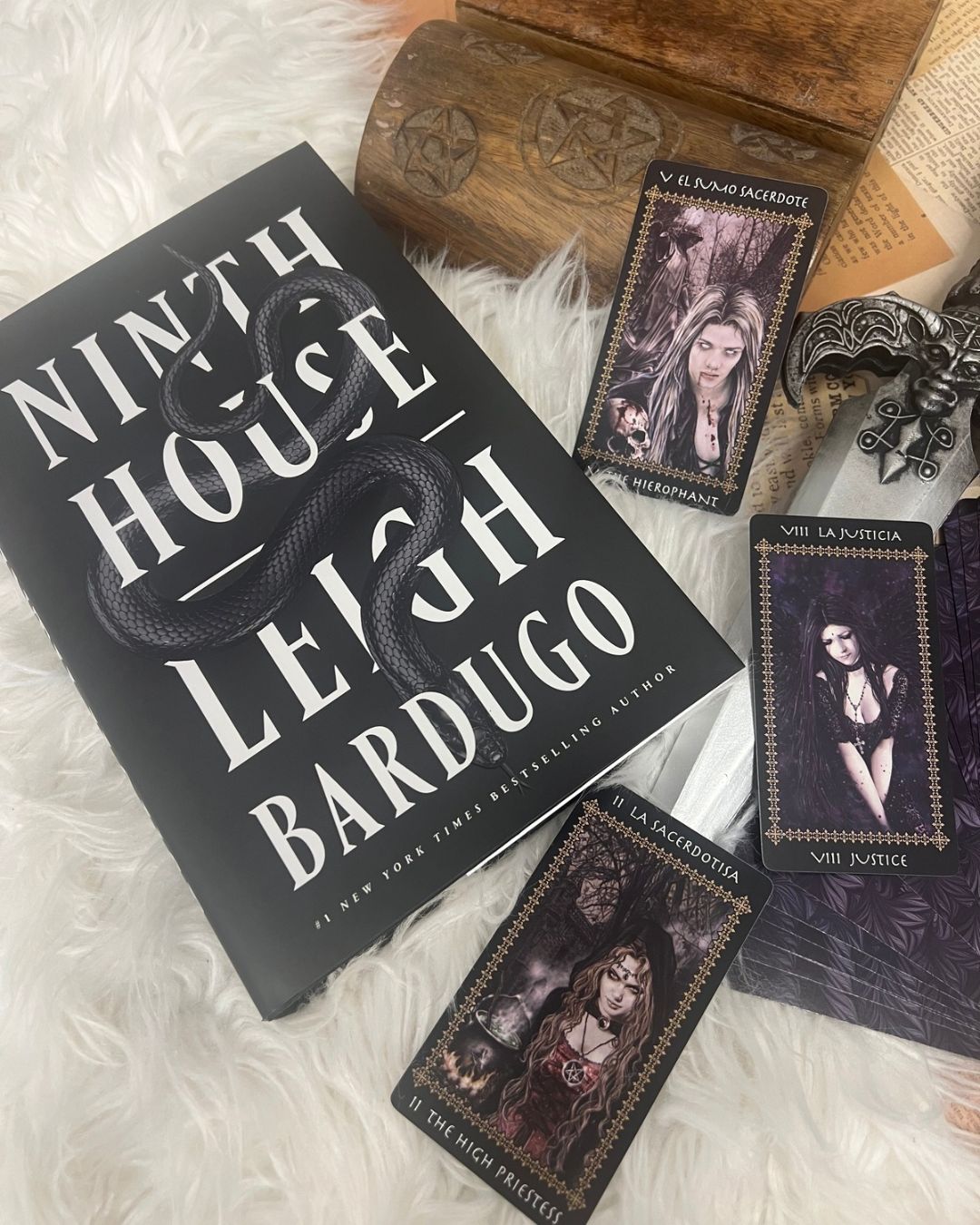
Spoiler warning: Major spoilers for Ninth House and Hell Bent ahead. Read them first.
Still here?
Excellent. So you know Leigh Bardugo’s Ninth House and Hell Bent are two of the best dark academia books going, and Alex Stern is a huge part of the reason why.
She’s so fucked up. Like, completely.
Galaxy ‘Alex’ Stern is a recovering drug addict who’s spent most of her life purposefully putting herself through hell because it’s preferable to living with a power she can’t control.
Alex sees Grays (aka ghosts).
And sometimes, they rape her.
The girl clearly has severe PTSD.
Her grandmother may have understood her gift, but she died when Alex was young. After that, nobody believed her, nobody knew what she was, and nobody could teach her how to control it or live with it.
Drugs, sexual exploitation, a dealer who used her for sex, pimped her out to cover his debts, and expected her to lie, cheat and steal for him. And she did. The one person who understood and loved her was Hellie, her best friend, even though Hellie didn’t understand her gift.
And then Hellie died.
And Alex’s gift somehow saved her from the most fucked-up situation imaginable.
Yet she wished she’d died with Hellie.
An Indecent Proposal From Lethe
That’s the survivor’s guilt she’s carrying when Yale swoops in offering a full scholarship, somewhere to live, an education, a future, and the first real chance she’s ever had to understand the thing destroying her life.
She’s no fool. She’s waiting for the other shoe to drop, hoping to use Yale to get as much as she can for as long as she can.
Yale tells her she’s special. But she’s only there because of her gift.
Lethe, the organisation overseeing Yale’s occult secret societies, wants Alex’s rare ability to see Grays. They value her because she’s a useful tool.
She’s a commodity. They bought her.
She’s gone from sexual exploitation to the exploitation of her supernatural gift, and while one may be less vile in a bodily sense, I’m not sure it’s any less reprehensible.
Lethe aren’t arsed about Alex as a person, her wellbeing or her goals. They buy her, body and soul. Not literally; there’s no Faustian contract. But there’s a bargain, and the institution seems perfectly happy to chew on her until she’s dead, provided it can keep using her gift.
So What Does Alex Actually Gain?
Despite Lethe being somewhat less than scrupulous, Alex does benefit. She finally meets people who understand the Grays and gains access to knowledge she desperately needs. But the answers aren’t freely given. She has to fumble around and find them, discovering things nobody wanted her to know, and things Yale itself didn’t fully understand.
There’s no warmth in their offer; it’s as cold as the dead.
Especially when you realise Lethe had known about Alex for years.
They could’ve helped when she was a child. But they only offered the deal when it benefited them, without even giving her enough information to properly understand the risks and alternatives.
And even if they had, even if they’d offered exceptional support once she arrived, their recruitment would still be exploitative.
She wasn’t really in a position to refuse.
There’s a difference between access to education and genuine educational support.
University lecturers should give a shit. At Manchester and Bangor Universities, I was struggling with trauma, PTSD, and (at the time) undiagnosed bipolar disorder. Several of my lecturers recognised I needed help. Though they couldn’t diagnose me, they were supportive. One even realised I was mid-breakdown on exam day and allowed me to skip the final exam. He based my grade on the work already done, excluding the exam entirely so it didn’t drag down my average.
I got a first.
My universities didn’t require me to have some rare supernatural gift before they bothered to help. They saw I was struggling, and helped. I’ll forever love them for that.
That’s what makes Lethe’s treatment of Alex so disturbing to me. Failing to look after someone they recruited would be bad enough. But they’d known she was struggling for years and did nothing until she became useful.
So what does the bargain cost Alex? And what does she gain?
It’s tough to say. Because in some ways it costs her everything. In others, she gains knowledge, a future, and a bizarre kind of healing as she forges relationships with people who genuinely care about her.
None of which makes the circumstances under which she accepted the bargain any less exploitative.
Darlington Wanted Everything Alex Was Trying to Escape
The sublime mirroring of Alex and Daniel Arlington (exquisitely better known as Darlington) is perhaps the thing that really makes these books work.
Darlington comes from an entirely different world.
He’s educated, cultured, familiar with the traditions and expectations of elite institutions. His family background gives him a kind of inherited access, though his own childhood and financial circumstances are far more complicated than the appearances suggest.
He’s also utterly enchanted by the supernatural.
Darlington yearns for magic. As a teenager, he nearly killed himself attempting to make the dangerous preparation that allows normal humans to see Grays. This is how Lethe chose him, not something he learnt from them.
He may be privileged by access to social worlds Alex has never even seen, but the world he most wants to immerse himself in is the extraordinary supernatural realm she’s been desperate to escape her entire life.
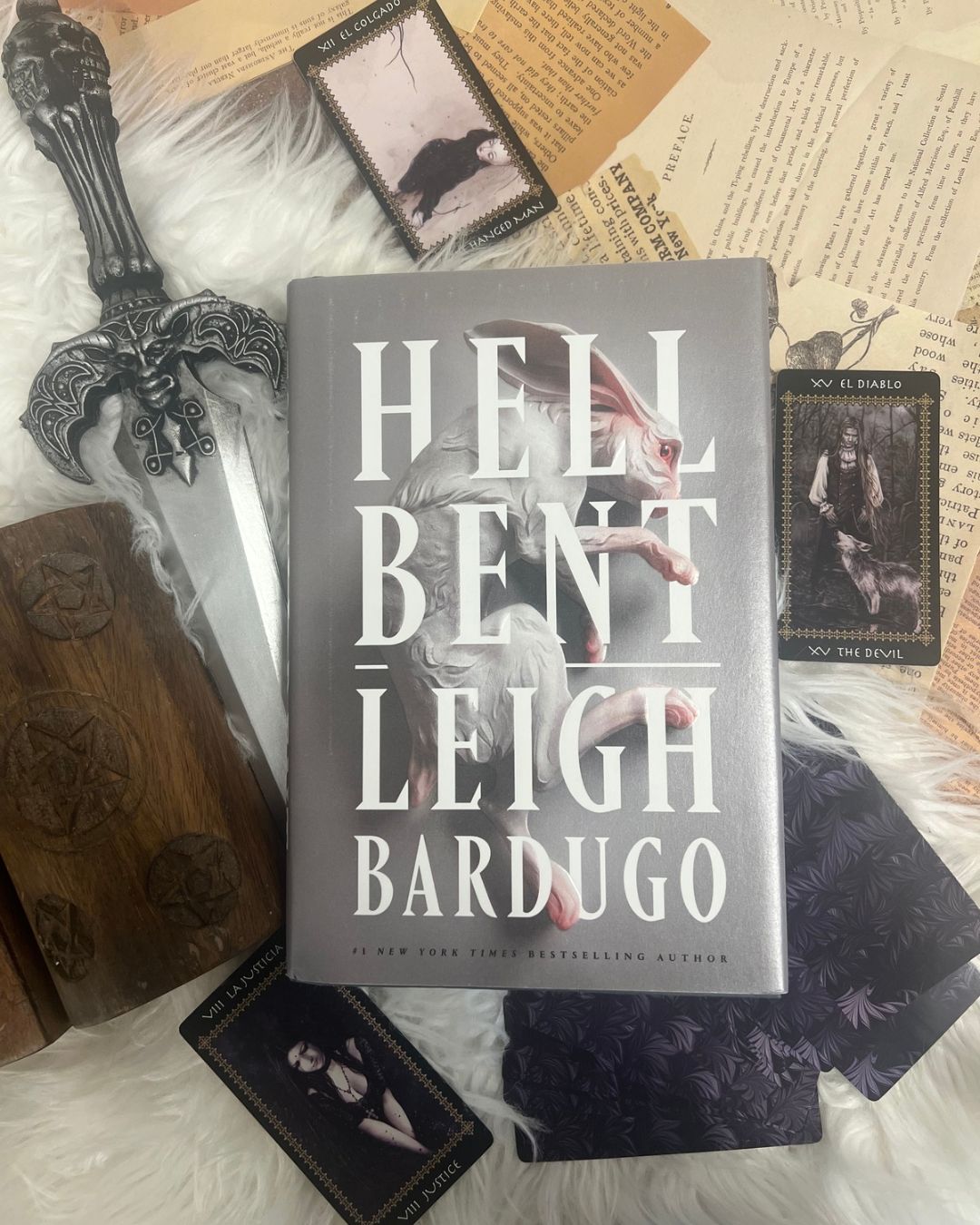
Darlington resents Alex initially.
He’s worked his arse off to achieve his position in Lethe. He’s studied, trained, risked his life pursuing knowledge beyond the level most humans can access.
Then along comes this upstart girl from nowhere. Alex knows absolutely nothing. She’s a feral little lunatic. Yet she can naturally see Grays. She has access to magical realms he can’t even see without taking dangerous concoctions. And she sees them in colour.
All he ever sees is gray.
And she hasn’t earned it.
Yet now he’s expected to prepare her to take over from him.
Not the protege he’d have chosen.
I love the dynamic between these two because they’re both so complicated. Darlington can be privileged, idealistic, resentful, almost petty. He’s also brilliant, empathetic, charismatic, adorable, and deeply, deeply damaged.
Just like Alex. Who’s a heady combination of anger, terror, trauma, fierce (if not academic) intelligence, and an extraordinary capacity for persevering and muddling through no matter what the world throws at her, despite how hard she breaks in the process.
You’d forgive either of them for being guarded, jaded, and thoroughly incapable of finding wonder or warmth in the world, yet somehow they both still care, feel, and want deeply.
And despite his initial resentment, Darlington guides Alex. He comes to appreciate her, and care for her. Mentoring her grows from a reluctant obligation into something he seems genuinely invested in despite how prickly she is. Alex, meanwhile, thaws ever so slightly, and is just beginning to see the world through Darlington’s eyes, seeing the wonder of her gift, when he disappears.
The Absence Of Darlington Lets Alex See Yale Clearly
Bereft of her Virgil, Alex is left trying to navigate an institution she barely understands, terrified that Darlington is dead, blaming herself for his disappearance, and utterly determined to get him back.
His absence and her determination force her to develop other relationships, with Dawes, Turner, even Tripp becomes a sort of adopted sibling. Her friendships are awkward, slow, complicated, which is why they’re believable. And her grief over Darlington, her willingness to do whatever it takes to get him back (no matter how astonishingly ill-advised) is beautiful.
The only genuinely good part of the system is the found family Alex builds around herself.
Darlington teaches her. Dawes and Turner help her. Mercy and Lauren nurture her. Even the Bridegroom, one of the most notorious Grays on campus, becomes an unusual ally. Alex forges a little family around herself, a group of ride or die people she can rely on, who rely on her. Willingly or not, she steps into the void Darlington left, and steps up to a level nobody had occupied previously.
Because she sees things in ways others can’t.
And not just the Grays.
Mina Harker would approve. One person with all the power is a terrifying prospect until a bunch of people with different bits of knowledge start comparing notes.
One of the harshest revelations in Ninth House is that Professor Belbalm, somebody Alex trusted, is exploiting vulnerable young women for her own supernatural survival. Dean Sandow’s involvement in Tara Hutchins’s murder and Darlington’s disappearance exposes another form of corruption within the organisation supposedly responsible for keeping the secret societies in check.
Which brings us back to the original Scholomance bargain, and casts it in a rather different light.
In folklore, the Devil takes the tenth scholar as payment for teaching the others. Whatever the specifics of that bargain may be, the one paying the price is part of the institution.
They’ve received the education.
But what happens when the price of access to extraordinary knowledge falls on someone who received none of its benefits?
Tara Hutchins isn’t one of Yale’s privileged occult scholars. She doesn’t enter an elite magical institution seeking forbidden knowledge. Yet her death becomes part of Sandow’s attempt to manipulate supernatural power for his own purposes. Belbalm’s victims are similarly exploited.
Expendable lives sacrificed in someone else’s pursuit of power.
They aren’t offered a place at the Devil’s school.
They’re paying for somebody else’s education.
Going to Hell for Someone You Love Is a Rather Different Bargain
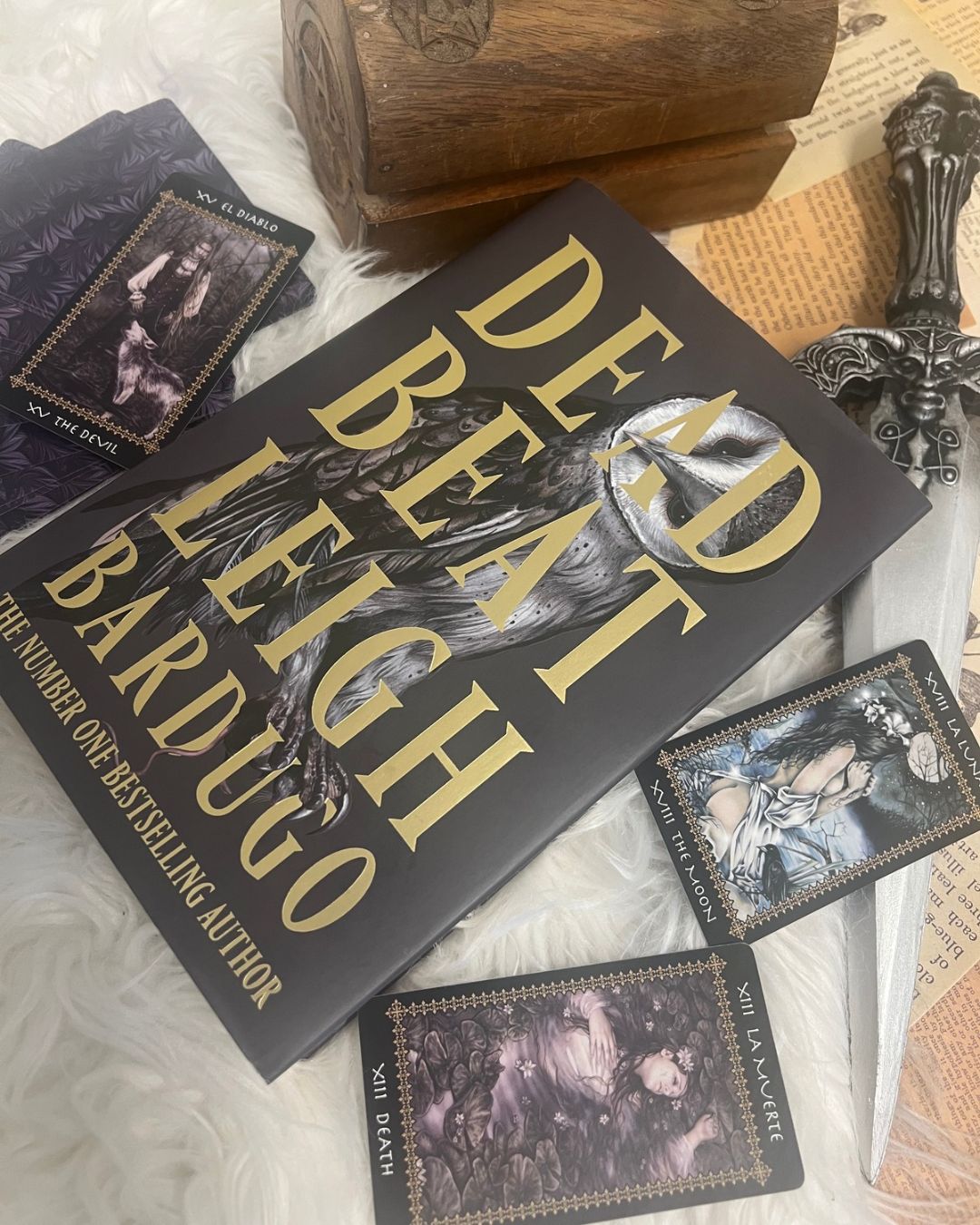
By the time we reach Hell Bent, Alex’s relationship with the institution has changed. She’s beginning to understand that the system wants to use her, and she starts using what she’s learned to pursue something she wants.
Darlington.
He’s trapped in Hell. Alex is determined to get him back. Lethe doesn’t want her attempting the rescue. Alex does it anyway. It’s a spectacularly bad idea for many and varied reasons, but by the end of the second book, Alex has been through literal Hell, and dragged her hard-won troupe of almost-friends with her.
Twice.
It’s what makes them the dysfunctional little family that they are. And while they may not have all gone willingly, they did follow her into hell and back.
Twice.
Alex didn’t do that for Lethe. Or for Yale.
That was for Darlington. And maybe for herself.
She suffers so she can learn, and in learning finds ways to ease her suffering.
It’s almost ouroborosian in its cyclical nature, which I don’t think was accidental given how much snake imagery Alex has inked on her skin.
Her choices are increasingly for herself, rather than being steered by people who recruited her. Are they questionable? Totally. But they’re hers.
When she risks everything for Darlington it’s not because she’s trapped in a situation with no other way out than to accept the raw end of a bad deal. It’s a selfless choice for a reason that’s entirely her own, and is, perhaps, also a little selfish. What she puts everyone else through in order to get Darlington back?
Questionable.
The extent to which she’s hell bent on saving him because she couldn’t save Hellie and she knows her psyche can’t deal with another guilt trip hitting that hard?
Debatable.
Meanwhile, Darlington has literally been in hell, and the experience has made his relationship with supernatural knowledge considerably more complicated than the idealism and romanticised fever dream of magic that initially drew him towards it.
A Brief Word About Fourth Wing, Because DRAGONS
Spoiler Alert: If you’ve not read Fourth Wing or Iron Flame yet, come back to this when you have!
I promised I’d get to Fourth Wing somewhere in this whole discussion, and here we are. Because Basgiath War College is an elite educational institution where students face dangerous trials, brutal hierarchies, and the very real possibility of dying before they’ve even made it into the building, let alone graduated.
And they bond with dragons.
Proper dragons.
Dragons who talk.
They ride them and everything.
Through that bonding, dragon riders gain supernatural abilities.
The girl is a literal lightning wielder.
Sound familiar?
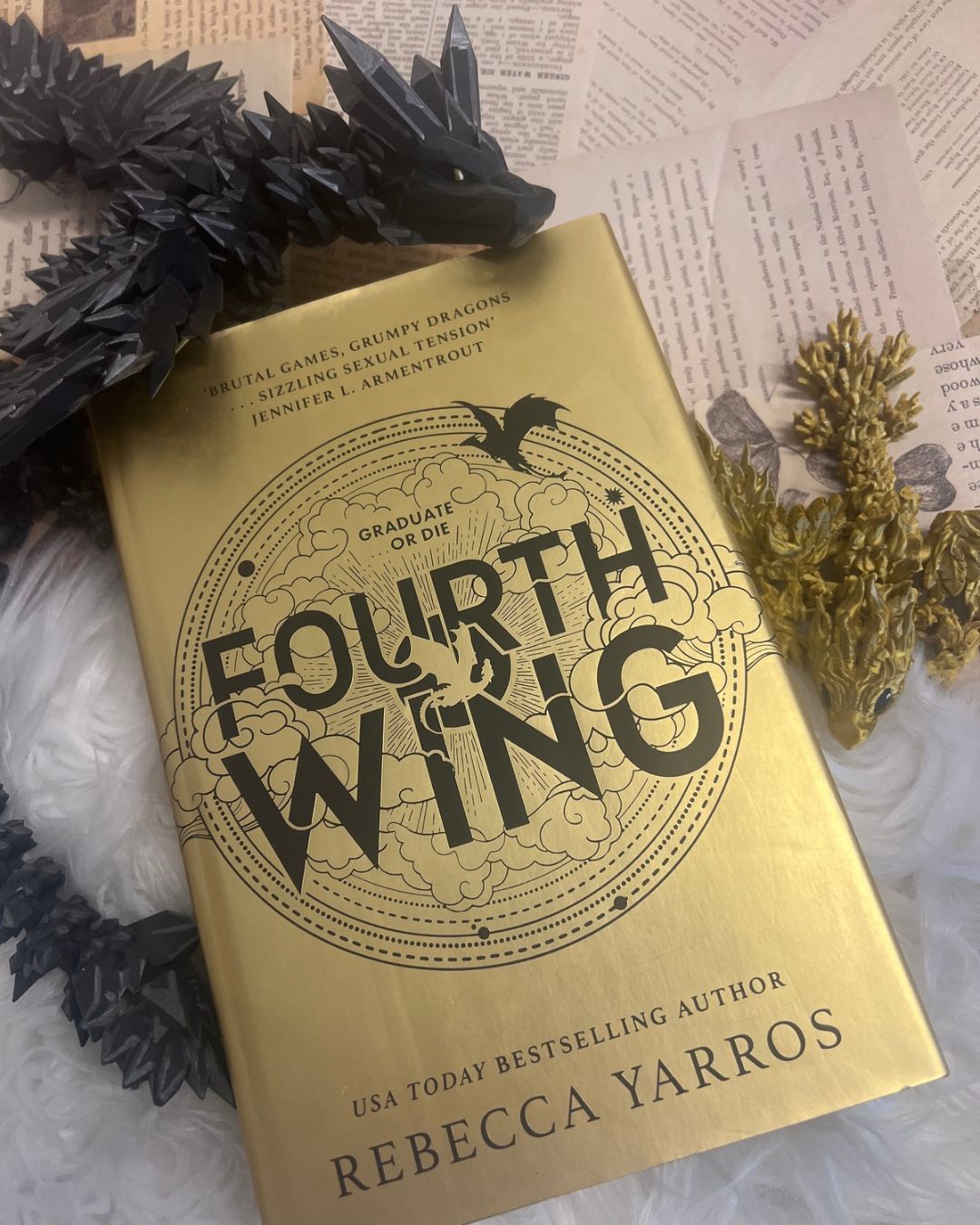
I’ve no proof Yarros borrowed directly from the Scholomance folklore, though you can see the influence of mythology from several cultures in the book, the only one she’s confirmed (rather hilariously, I might add) is Gaelic.
And if you think I’m overreaching on the whole Fourth Wing question, I ask you to consider the fate of Violet Sorrengail’s weather-wielding mother, and the literal architecture she died to power.
Because Gerard records another Transylvanian superstition along with her account of the Scholomance. Buildings of particular significance wouldn’t stand unless a living person was walled up inside them. Later versions substituted the victim’s shadow, but the poor bastard still died, and didn’t even know why.
A life sacrificed to the foundations of the institution. This is a motif that pops up in other places too. One particular myth, which may or may not be about Merlin, springs to mind. And wouldn’t you know, that one involves dragons. Even in modern work, Netflix’s adaptation of The Witcher novels sees several young sorceresses sacrificed to power the magical academy of Aretuza. They’re not walled up in the building, but they’re turned into eels, which frankly may be worse.
The underlying thread is that ancient institutions required a sacrifice simply to stand.
Simply to exist.
That casts all the beautifully gothic architecture of dark academia in a rather unsettling light.
Whose suffering built all that beauty? How many lives were sapped to charge all that power? What happens when institutions are willing to build their own power on the sacrifices of students, innocents, and anyone who gets in the way?
Extraordinary knowledge or achievements are literally built or sustained through sacrifice. And suddenly, the nature of everything about the institution hinges on whether the people being sacrificed are willing, what they choose, if they choose freely, whether they receive benefits in return, and whether they’re even aware of the bargain.
The Tenth Scholar And The Question Nobody Thought To Ask
I started all this wondering whether being the Devil’s tenth scholar would be a punishment or a privilege.
Frankly, the promise of a talking dragon still makes the whole arrangement rather appealing. But the foundation-sacrifice stories have left me with a different question.
In the story of Vortigern’s collapsing tower, the experts decide that the solution is to kill a boy and put his blood in the foundations. The boy, who turns out to be Merlin in one telling, points them towards a hidden pool, and the two dragons beneath it.
They didn’t need a dead child. They needed somebody who understood why the bloody tower kept falling down.
Which is rather awkward when the people demanding a sacrifice are supposed to be the ones with all the knowledge.
What if the price of extraordinary achievements isn’t inevitable? What if it’s simply what somebody powerful enough to dictate the terms has decided everyone else should pay?
And what does it say about an institution devoted to learning if nobody inside it thinks to question that decision?
Perhaps the most interesting thing about the tenth scholar isn’t whether the Devil chose the best student or the unluckiest.
It’s whether, after seven years learning the mysteries of nature, any of them thought to ask why the Devil had to keep one at all.
Personally, I’d ask.
Ideally while sitting astride my dragon.
